SME Chamber Landlords section meets Minister for Social and Aaffordable Accomodation Roderick Galdes


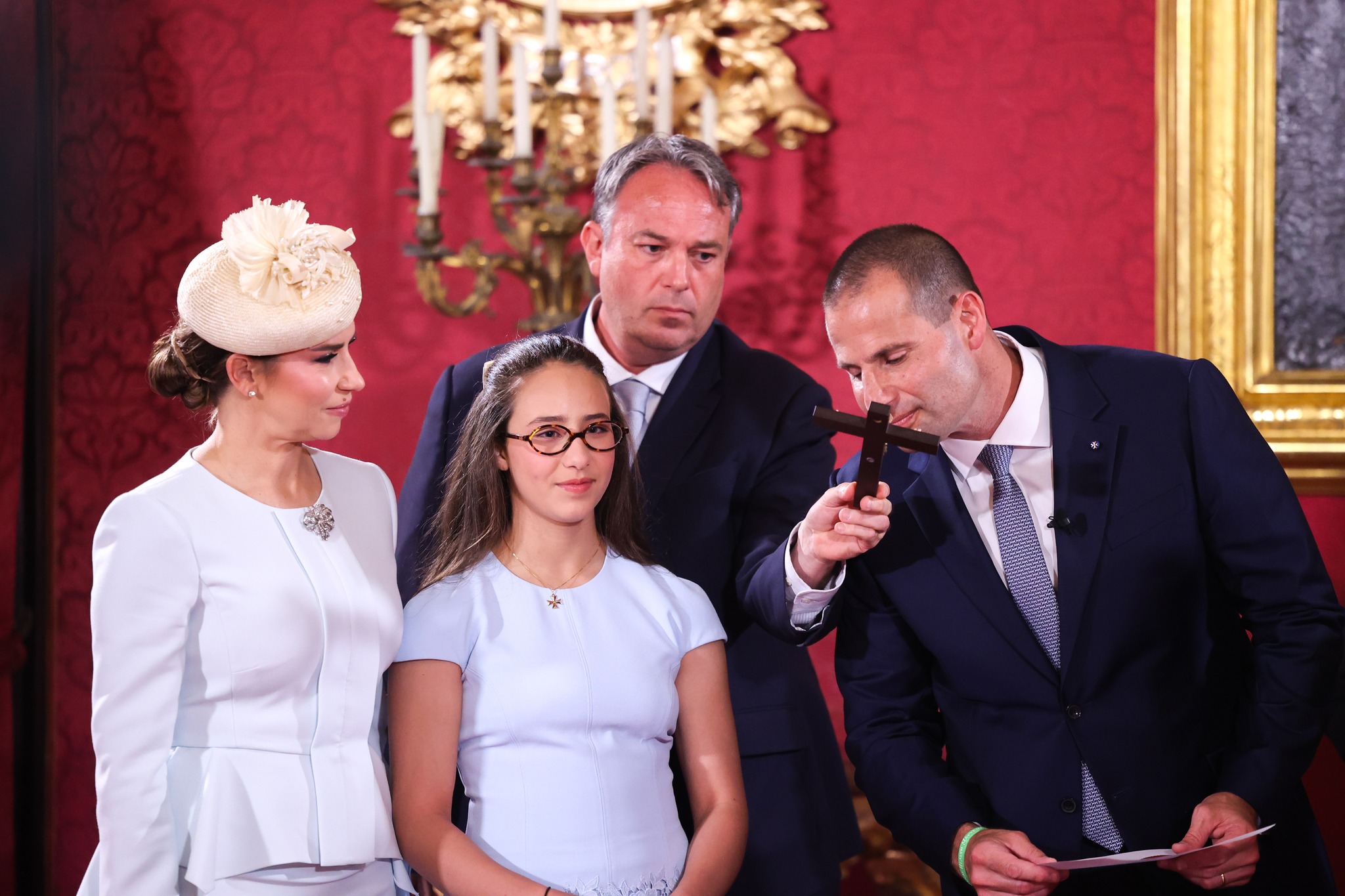
Council members of the Malta Chamber of SMEs, together with members of staff, attended an event organised by Her Excellency Myriam Spiteri Debono, President of Malta, during which she hosted members of the Malta Council for Economic and Social Development (MCESD) at San Anton Palace.
She also encouraged representatives to extend their support to the Malta Community Chest Fund.


The Malta Chamber of SMEs met the new Opposition Leader Hon. @alexborg and other Members of Parliament to discuss current issues related to members of the Malta Chamber of SMEs.
President Mr Paul Abela, Deputy President Mr Philip Fenech, COO Mr Andrew Aquilina and Council Members Mr Marcel Mizzi, Mr Beppe Muscat, Mr Robert Micallef, Me Michael Galea, Ms Donha Muscat, Ms Joan Haber and Mr Joseph Zerafa participated on behalf the SME Chamber during this meeting.


The Malta Chamber of SMEs welcomes the positive news that direct flights between Malta International Airport and New York’s John F. Kennedy International Airport will commence in June, operated by Delta Air Lines.
This is a major development for Malta and its international connectivity. The United States remains an important market from which Malta can continue to benefit, both in tourism and business opportunities.
The SME Chamber congratulates Hon. Deputy Prime Minister Ian Borg, Malta Tourism Authority CEO Mr. Carlo Micallef, Malta Tourism Authority Deputy CEO amd Chief Officer Strategy Mr Leslie Vella and all stakeholders involved in successfully securing this highly significant route.
The SME Chamber hopes that this new route marks the beginning of a series of successes for the future of Malta’s tourism sector. We look forward to continuing our close collaboration with the Ministry and the MTA to further strengthen the sector.

The Malta Chamber of SMEs congratulates Dr Alex Borg on his election as Leader of the Nationalist Party. The SME Chamber emphasises that a strong and effective opposition is fundamental to the proper functioning of a healthy democracy.
The Malta Chamber of SMEs looks forward to meeting Dr Borg in his new capacity as Leader of the Nationalist party and eventually Opposition Leader. The Malta Chamber of SMEs also looks forward to holding meetings with the Opposition to present and discuss its proposals for the 2026 Budget.
Furthermore, the SME Chamber expresses its gratitude to Dr Bernard Grech for his commitment and service over the past years.

Rota, Malta’s active mobility NGO, has recently launched an initiative inviting schools, businesses, and organisations to propose project ideas that can make use of our cargo bike. The goal is to demonstrate how cargo bikes can be practical, sustainable alternatives to cars and vans—helping reduce traffic congestion, air pollution, and car-dependency in Malta.
Rota is looking for collaborators!
Rota is inviting companies, schools, and organisations to propose project ideas that can make use of our cargo bike. Whether it’s delivering goods into city centres, collecting waste, supporting school initiatives, or showcasing sustainable logistics, your project could help reduce car-dependency and promote cleaner transport in Malta.
Possible projects could include:
Rota will provide the cargo bike—you provide the idea. Together, we can make Malta safer, quieter, and greener.
You can also support our work by becoming a corporate member of Rota (starting from €200/year) at www.rota.mt/support. Donations to voluntary organisations of a social nature, including environmental NGOs, are eligible for a tax credit of up to €500.
Let’s work together for a better Malta.
Why digital accessibility is no longer optional – and how even micro-enterprises can benefit
Published by TimesofMalta

The EU Accessibility Act (EAA) came into force on June 28. In simple terms, it requires businesses to make their digital products and services accessible to people with disabilities. While the original directive includes several long-standing obligations, such as those on physical accessibility, this latest iteration brings renewed focus on digital and online accessibility.
The recent updates are primarily targeted at large enterprises, including national service providers and consumer product manufacturers whose offerings are intended for public use. The directive seeks to ensure that widely used devices and services are fully accessible, whether they are imported or provided locally. Digital hardware used to deliver common services such as access control, online banking, ATMs, e-commerce, online booking and ordering must be designed to be fully accessible to users with any type of disability.
Governments face a significant challenge in complying with the new standards as all government’s digital assets need to be compliant. As most of these services are indispensable to practically everyone, they are directly impacted. Here in Malta, a lot of progress has been made in this regard with the work of the relevant government entities and CRPD but a lot remains to be done. Small businesses are not entirely off the hook either and non-compliance can result in hefty fines.
In reality, most micro and small businesses are exempt except for those selling products through an eCommerce platform to local or international customers, however small they may be. Informational and corporate websites with no online sales function are largely excluded. That said, even these businesses can benefit from complying with the updated accessibility standards.
In Europe, there are over 100 million people with disabilities of some sort, which is a market too large to overlook.
Furthermore, search engines are now penalising inaccessible websites, which means that a fully accessible website can bring more traffic and potential customers.
Brand reputation can also benefit by having a fully accessible digital identity.
The goal of the directive, and its implementation in Malta, is not to burden businesses unnecessarily but to ensure that people with disabilities can access eCommerce platforms, including those run by micro-enterprises. In fact, the legislation also includes an exemption clause.
Small businesses that cannot afford the required changes and upgrades or if the cost will have a significant impact on their operations can apply for an exemption through a formal process.
This process involves documentation and effort, the cost and complexity of which are not yet fully known. It may be more practical and cost-effective to simply implement the necessary updates.
Additionally, the directive promotes a “design for accessibility” approach, which means that accessibility should be considered and built into new online projects from the very beginning. Adhering to the standards of the directive from the start is not too hard and much easier than making changes later when pressed to comply.
A lot of questions arise, such as, would a B2B Wholesale eCommerce site with a limited audience have to comply? To access these sites, a user would typically need a login and password, which would be supplied by the site owner. Arguably, if none of the users have special needs, why would the owner have to abide by the standards?
While researching for this article, this question was raised and the straight answer is ‘no’ unless one of the resellers has disability issues. So, in this case, if there are no users with special needs, nothing needs to be done. If, however, there is a complaint, the owner would have to accommodate the needs of the complainant.
Small businesses with eCommerce platforms in Malta first need to know how compliant they are to begin with. This can easily be done using one of the numerous free online accessibility scanners. The results will highlight the areas needing improvement. Unless the business has the expertise in-house, a web developer would need to be involved to implement the changes.
Fortunately, many of the required updates can be addressed using plug-ins or add-ons, which are inexpensive and readily available. Most of these provide features such as changing text size, colours, zooming and so on. These extensions, however, will not add descriptive tags to product images and getting that done manually can be a considerable challenge. If the task is unsurmountable with the current resources, at the very least, businesses can devise a strategy that, from now on, all product images include the necessary descriptive tags.
The idea behind adding descriptions to all images is so that persons with low eyesight can use screen readers. These readers will only read out the hidden text behind the image and, without that, they will simply just say ‘image’ or read the image filename.
Another key factor is raising awareness within both private enterprises and government institutions. Staff should understand accessibility, not only in terms of physical access but also digital accessibility. In some cases, a brief explanation may be sufficient, while in others, structured training can be invaluable.
Ultimately, the most effective way to ensure your website meets the requirements of the directive is to gather feedback directly from individuals with disabilities. Their insights are invaluable in assessing the real-world impact of your efforts.

The Malta Chamber of SMEs has expressed its support for the affordable housing initiative jointly launched by the Government and the Church, following a detailed review that addressed initial concerns raised by the SME Chamber.
Although The SME Chamber acknowledges the existing gap in the market present when it comes to enabling lower-middle-income families to become homeowners, the Malta Chamber of SMEs had initially raised concerns that this scheme might open room for potential abuse, inefficiencies or free market interference.
To address these concerns, the SME Chamber held separate meetings with the Minister for Social and Affordable Accommodation, Hon. Rodrick Galdes, as well as with the Foundation for Affordable Housing.
Following these discussions, the SME Chamber was given the necessary assurance that the governance aspect as well as market stability will be maintained through a fair and transparent mechanism, implemented to manage the scheme to minimise concerns raised.
The Malta Chamber of SMEs therefore supports the initiative and encourages the continued implementation of strict safeguards and transparency to ensure the intended households benefit fully from the scheme. The SME Chamber will continue holding discussions with the necessary stakeholders to ensure that the scheme remains aligned with its objectives, maintains transparency, and effectively addresses the needs of lower-middle-income families.

The Malta Chamber of SMEs, representing private education institutions licensed by MFHEA, is deeply concerned by the developments surrounding the International European University, Ukraine Malta Campus (IEU) case. While the situation is most unfortunate for the students directly affected, it also casts a shadow over the reputation of other legitimate private institutions that work tirelessly to deliver quality education.
The SME Chamber stresses that immediate action must be taken to protect students’ interests. Government should step in to ensure that affected students are given every possible support and facilitated in finding alternative pathways to continue their studies without further disruption and to ensure that the VISA Unit co-ordinates with MFHEA directly to offer these students an alternative. This is essential not only to safeguard students but also to safeguard the credibility of the wider private education sector in Malta.
At the same time, institutions found to be operating irresponsibly, irrespective of their license status, must be held accountable. The Malta Chamber of SMEs also notes that even though the license granted was temporary due to current events, had all aspects of Quality Assurance which would normally be necessary for granting a permanent license been carried out immediately upon licensing, this unfortunate situation could have been avoided. This incident highlights the need for the Authority to adopt a more risk-based approach to supervise, monitor and audit institutions. This approach should ensure that sufficient resources are available and are dedicated to provide appropriate review and supervision to those institutions that require greater scrutiny.
It is becoming imperative that the government works together with private education providers to cultivate an educational ecosystem that delivers excellence and focuses on quality.
The SME Chamber reiterates that the majority of private education providers in Malta operate to high standards and contribute positively to the country’s educational landscape. The current situation should not be allowed to damage the hard-earned reputation of these institutions